Menu

Neurotech

Accelerating brain-computer interfaces (BCI), whole-organism emulation (WOE), & NeuroAI to expand human cognition.

Neurotechnology and AI will qualitatively change the human experience of life. Within five years, the treatment of brain disorders will be completely restructured by brain–computer interfaces (BCIs) that restore sensory or motor, and by the closed-loop control of brain states like mood via neuromodulation. Within a decade, neural augmentation will become feasible, with read/write interfaces that enable humans and machines to co-process information—expanding cognitive capabilities rather than merely compensating for deficits. Looking further ahead, we will build biologically inspired AI that spans the full range of human cognition, improving on the jagged intelligence of today's models while requiring far less energy than conventional data-center approaches. Ultimately, high-fidelity simulations of individual brains—potentially down to cellular or molecular detail—will enable our successor species: human minds in digital form.

This technological future is within reach, but the certainty and timeline of its realization are subject to the choices taken by the individuals and institutions in the neurotechnology and NeuroAI ecosystem. Through venture funding, grantmaking, and field building Protocol Labs Neuro aims to influence those choices and accelerate progress to benefit millions of people.

Strategy

Opportunity Spaces

Three convergence zones where PL Neuro can accelerate the integration of minds and machines in ways that expand human potential while maintaining autonomy and dignity.

Neurotech field velocity

How Neurotech is moving: the same instruments and inflection points tracked in our cross-field overview. Field progress is not a claim of PL attribution.

Open a reading or inflection point for its evidence. Click, hold and drag across a spark line to compare two points.

Field velocity· Is the field speeding up?

Performance curves · capability

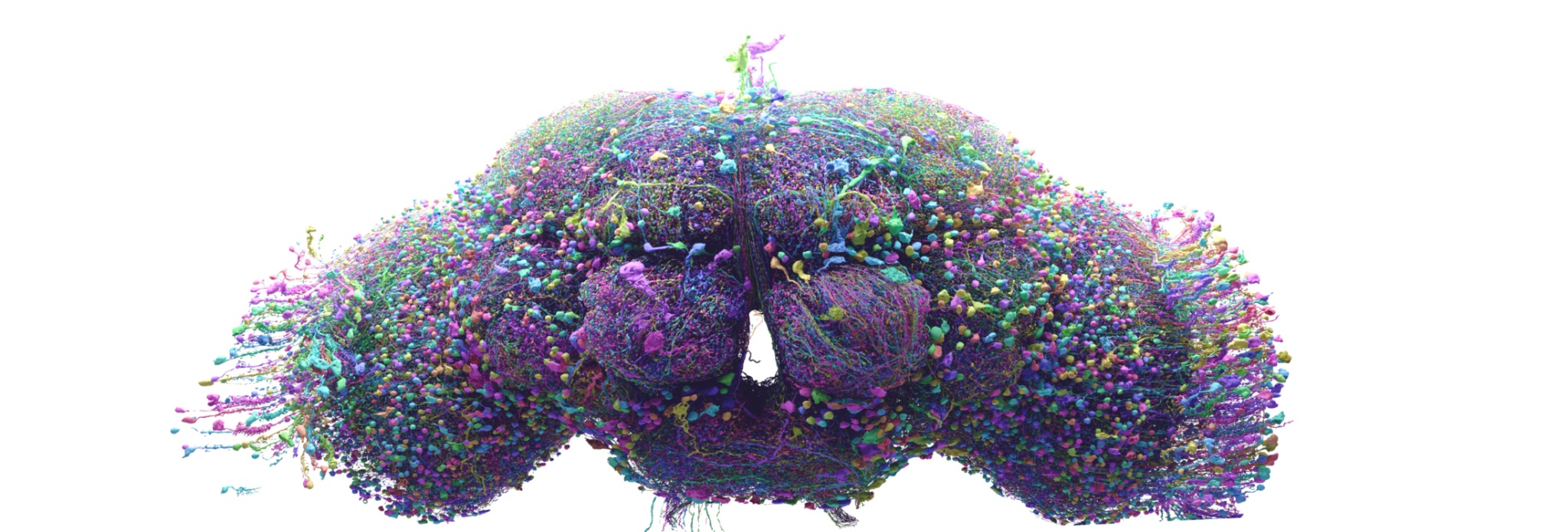
Neural tissue mapped — selected datasets

Selected global evidence across human, mouse, and fruit fly datasets; not an exhaustive inventory or worldwide cumulative volume.

mm³ · Log scale

Neural tissue mapped — selected datasets: mm³ by date. log scale. Separate evidence tracks; source data below.1e-41e-30.010.1120112025Bock mouse cortex · imaged bounds · Bock mouse V1: ≈ 0.00819 mm³ · 2011 (year precision; publication)Hemibrain fly · sample bounds · Hemibrain: ≈ 0.0156 mm³ · 2020 (year precision; publication)H01 human cortex · imaged tissue · H01 first public release: ≈ 1 mm³ · Jun 1, 2021 (day precision; release)MICrONS mouse cortex · imaged tissue · MICrONS v117: ≈ 1 mm³ · Jul 2021 (month precision; release)FlyWire fly · neuropil volume · FlyWire whole-brain neuropil: 0.0175 mm³ · 2024 (year precision; publication)LICONN mouse cortex · native tissue · LICONN native tissue: ≈ 0.00095 mm³ · 2025 (year precision; publication)MaleCNS fly · imaged volume · MaleCNS v0.9: ≈ 0.082 mm³ · Oct 3, 2025 (day precision; release)

Some markers overlap. Select a track to isolate it; axes stay fixed.

Sample bounds, imaged volume, and neuropil volume are not interchangeable. Reconstruction completeness varies; no cross-dataset lines, sums, or global growth rate.

Sources & data · 7 observations

Physical volume checkpoints in selected synapse-resolution imaging and reconstruction datasets, with species and volume basis kept distinct.

Evidence checked 2026-09-09. Dates retain the source’s precision; chart positions are not exact dates when only a month or year is known.

Bock mouse cortex · imaged bounds

Mouse V1 serial-EM imaged tissue extent; not a saturated connectome.

Bock mouse cortex · imaged bounds: observations and sources
Date / valueEvidence
≈ 0.00819 mm³2011 (year precision; publication)Bock mouse V1

Source: “Reconstruction encompasses 450 X 350 X 52 um volume of tissue.” Derived geometric volume: 450 × 350 × 52 / 10⁹ = 0.00819 mm³. Publication-year checkpoint; first release date not established. Dense reconstruction of every neurite is not asserted.

Bock mouse V1 — primary source

Hemibrain fly · sample bounds

Adult female fly central-brain sample bounding volume; segmented, synapse annotated, extensively proofread.

Hemibrain fly · sample bounds: observations and sources
Date / valueEvidence
≈ 0.0156 mm³2020 (year precision; publication)Hemibrain

Source: “The hemibrain sample is roughly 250 × 250 × 250 μm.” Geometric product 0.015625 mm³, displayed approximately 0.0156; not acquired voxel-mask volume. Publication year, not exact release date.

Hemibrain — primary source

H01 human cortex · imaged tissue

Human temporal-cortex EM sample, automatically reconstructed with selected cells proofread.

H01 human cortex · imaged tissue: observations and sources
Date / valueEvidence
≈ 1 mm³Jun 1, 2021 (day precision; release)H01 first public release

Source: “roughly one cubic millimeter of brain tissue.” Announcement dated June 1, 2021. Automated segmentation and annotated synapses; only selected cells proofread. Later 1.05-mm³ compression-corrected paper estimate is not new tissue.

H01 first public release — primary source

MICrONS mouse cortex · imaged tissue

Mouse visual-cortex cubic-millimeter-class EM resource; dense automated reconstruction, selective proofreading.

MICrONS mouse cortex · imaged tissue: observations and sources
Date / valueEvidence
≈ 1 mm³Jul 2021 (month precision; release)MICrONS v117

Source: “first public data released on the cubic millimeter dataset in July 2021.” Approximate nominal sample scale, not an exact valid segmentation mask. July precision; 2025 paper is later analysis of this specimen.

MICrONS v117 — primary source

FlyWire fly · neuropil volume

Adult female fly whole-brain neuropil volume; not whole-specimen image volume.

FlyWire fly · neuropil volume: observations and sources
Date / valueEvidence
0.0175 mm³2024 (year precision; publication)FlyWire whole-brain neuropil

Source: “The whole brain contains 0.0175 mm³ of neuropil volume.” Publication-year checkpoint for this reported value; the reconstruction reuses FAFB imagery and is not new tissue acquired in 2024.

FlyWire whole-brain neuropil — primary source

LICONN mouse cortex · native tissue

Light-microscopy reconstruction of mouse somatosensory cortex, measured before hydrogel expansion.

LICONN mouse cortex · native tissue: observations and sources
Date / valueEvidence
≈ 0.00095 mm³2025 (year precision; publication)LICONN native tissue

Figure 1: “0.95 × 10⁶ µm³ before” expansion, equivalent to 0.00095 mm³. Native volume, not expanded hydrogel; automated dense reconstruction with synaptic molecular predictions and selected traced validation regions. Publication-year checkpoint, first final-dataset release not established.

LICONN native tissue — primary source

MaleCNS fly · imaged volume

Adult male fly brain and ventral nerve cord EM image volume; segmented and extensively proofread.

MaleCNS fly · imaged volume: observations and sources
Date / valueEvidence
≈ 0.082 mm³Oct 3, 2025 (day precision; release)MaleCNS v0.9

Preprint: “0.082 mm3 total volume” (160 teravoxels at 8-nm isotropic resolution). Release date independently verified at https://male-cns.janelia.org/ : “2025-10-03 - MaleCNS v0.9 released”. Later v1.0 and 2026 publication reuse this specimen; not all synapses have proofread partners.

MaleCNS v0.9 — primary source

Revealed commitments · adoption

Implanted BCI participants — selected cohorts

Selected global evidence: historical literature/disclosure cohort plus separate company/program checkpoints. Incomplete coverage, not a current worldwide total.

participants · Linear scale

Implanted BCI participants — selected cohorts: participants by date. linear scale. Separate evidence tracks; source data below.02040608020232026Identified global review cohort · Review cohort through Dec 2023: 67 participants · Dec 2023 (month precision; observation)Neuralink · cumulative recipients · Neuralink first participant: 1 participants · Jan 2024 (month precision; observation)Neuralink · cumulative recipients · Neuralink second participant: 2 participants · Jul 2024 (month precision; observation)Neuralink · cumulative recipients · Neuralink three participants: 3 participants · Feb 5, 2025 (day precision; disclosure)Neuralink · cumulative recipients · Neuralink five participants: 5 participants · Jun 2, 2025 (day precision; disclosure)Neuralink · cumulative recipients · Neuralink 21 participants: 21 participants · Jan 28, 2026 (day precision; disclosure)Synchron · US and Australia · Synchron ten recipients: 10 participants · Nov 6, 2025 (day precision; disclosure)ONWARD ARC-BCI · brain–spine · ONWARD seven participants: 7 participants · Jan 22, 2026 (day precision; disclosure)Paradromics · long-term study · Paradromics first long-term participant: ≥ 1 participants · Jun 17, 2026 (day precision; disclosure)

Some markers overlap. Select a track to isolate it; axes stay fixed.

Cohorts overlap: do not add the review to company counts or suppliers to programs. Ever implanted is not active users. Lines join only Neuralink’s compatible cumulative checkpoints.

Sources & data · 9 observations

Publicly identified human recipients in assistive implanted-BCI research, including intracortical, surface, endovascular, and brain-to-spine interfaces.

Evidence checked 2026-09-09. Dates retain the source’s precision; chart positions are not exact dates when only a month or year is known.

Identified global review cohort

Authors’ discoverable 1998–December 2023 assistive-iBCI cohort; not an audited census.

Identified global review cohort: observations and sources
Date / valueEvidence
67 participantsDec 2023 (month precision; observation)Review cohort through Dec 2023

Source: “These groups have implanted a total of 67 participants”; data collection ended December 2023 and later implants are excluded. Includes ECoG and endovascular systems, not only intracortical. Only 31 were active at cutoff. Supplement Table 2 identifies participants but does not supply implantation-year columns; no annual points invented.

Patrick-Krueger et al., Nature Reviews Bioengineering

Neuralink · cumulative recipients

One company’s disclosed cumulative implanted trial participants; observation months early, disclosure dates later.

Neuralink · cumulative recipients: observations and sources
Date / valueEvidence
1 participantsJan 2024 (month precision; observation)Neuralink first participant

April 12, 2024 disclosure: “In January, we conducted the first human implantation.” January is the implantation month, not an exact surgery day.

Neuralink first participant — primary source
2 participantsJul 2024 (month precision; observation)Neuralink second participant

August 21, 2024 disclosure: “Last month, Alex ... the second participant ... received his Neuralink implant.” July implantation month; cumulative two recipients.

Neuralink second participant — primary source
3 participantsFeb 5, 2025 (day precision; disclosure)Neuralink three participants

Source: “Today, there are three people with Telepathy: Noland, Alex, and Brad.” Disclosure date, not all three surgery dates.

Neuralink three participants — primary source
5 participantsJun 2, 2025 (day precision; disclosure)Neuralink five participants

Source: “Five individuals with severe paralysis are now using Neuralink to control digital and physical devices with their thoughts.” Post-implant use supports receipt, not mere enrollment.

Neuralink five participants — primary source
21 participantsJan 28, 2026 (day precision; disclosure)Neuralink 21 participants

Company headline says “21 Neuralnauts enrolled”; implantation interpretation also requires body: “higher signal quality across 18 of the subsequent 20 participants” after the first recipient. Company-reported cumulative checkpoint, not independently audited current active users. Page release date Jan 28; last modification Feb 2 is not the checkpoint.

Neuralink 21 participants — primary source

Synchron · US and Australia

Company-reported Stentrode recipients across SWITCH and COMMAND; overlaps historical review.

Synchron · US and Australia: observations and sources
Date / valueEvidence
10 participantsNov 6, 2025 (day precision; disclosure)Synchron ten recipients

Issuer: “Stentrode BCIs have been placed in 10 patients with paralysis to date, across clinical trials in the U.S. and Australia.” Includes four Australian and six US recipients; do not add those subsets or add this to review baseline.

Synchron ten recipients — primary source

ONWARD ARC-BCI · brain–spine

Participants receiving cortical recording implant paired with spinal stimulation; count people, not hardware.

ONWARD ARC-BCI · brain–spine: observations and sources
Date / valueEvidence
7 participantsJan 22, 2026 (day precision; disclosure)ONWARD seven participants

Source: “Seven study participants have now received ARC-BCI Therapy.” Two additional people bring total to seven. Some historical CEA/WIMAGINE participants overlap the review; exact crosswalk unresolved.

ONWARD seven participants — primary source

Paradromics · long-term study

At least one long-term Connexus Connect-One recipient; excludes temporary 2025 epilepsy recording.

Paradromics · long-term study: observations and sources
Date / valueEvidence
≥ 1 participantsJun 17, 2026 (day precision; disclosure)Paradromics first long-term participant

June 17, 2026 issuer release: “The first participant ... was enrolled and implanted ... and will be followed and evaluated over the next six years.” Exact disclosure date, not surgery date. At least one long-term participant; earlier temporary 2025 epilepsy implantation is excluded.

Paradromics — first Connexus Connect-One implantation

Performance curves · data supply

Neural recording hours — selected datasets

Selected globally scoped evidence from US and Japanese human datasets and a multi-source nonhuman-primate corpus; not a harmonized worldwide archive total.

hours · Linear scale

Neural recording hours — selected datasets: hours by date. linear scale. Separate evidence tracks; source data below.05001K1.5K20172026TUSZ · human scalp EEG, controlled access · TUSZ v1.0.0: 170 hours · Apr 17, 2017 (day precision; release)TUSZ · human scalp EEG, controlled access · TUSZ v1.1.0: 425 hours · Aug 4, 2017 (day precision; release)TUSZ · human scalp EEG, controlled access · TUSZ v1.2.0: 504 hours · Apr 15, 2018 (day precision; release)TUSZ · human scalp EEG, controlled access · TUSZ v1.3.0: 651 hours · Aug 16, 2018 (day precision; release)TUSZ · human scalp EEG, controlled access · TUSZ v1.4.0: 651 hours · Nov 14, 2018 (day precision; release)TUSZ · human scalp EEG, controlled access · TUSZ v1.5.0: 1,074 hours · Jul 22, 2019 (day precision; release)TUSZ · human scalp EEG, controlled access · TUSZ v1.5.1: 1,074 hours · Apr 23, 2020 (day precision; release)TUSZ · human scalp EEG, controlled access · TUSZ v1.5.2: 1,074 hours · May 9, 2020 (day precision; release)AJILE12 · human intracranial, open · AJILE12 frozen release: 1,280 hours · Jan 27, 2022 (day precision; release)POYO-1 · primate spikes, training corpus · POYO-1 training corpus: > 100 hours · Oct 24, 2023 (day precision; publication)JapanEEG · human scalp EEG, open release claim · JapanEEG descriptor: 1,020 hours · May 31, 2026 (day precision; publication)

Some markers overlap. Select a track to isolate it; axes stay fixed.

No sums across datasets, releases, modalities, or model reuse. TUSZ includes held-out evaluation data; POYO is reused training-corpus scale. These are reported hours, not independently recomputed QC-valid subject-hours.

Sources & data · 11 observations

Reported recording duration in named datasets and releases, separated by modality and access; a model-training corpus is explicitly distinct.

Evidence checked 2026-09-09. Dates retain the source’s precision; chart positions are not exact dates when only a month or year is known.

TUSZ · human scalp EEG, controlled access

Maintainer-reported full seizure-corpus release sizes, including held-out evaluation; a subset of TUEG.

TUSZ · human scalp EEG, controlled access: observations and sources
Date / valueEvidence
170 hoursApr 17, 2017 (day precision; release)TUSZ v1.0.0

Table 1 reports v1.0.0, 2017-04-17, Total Duration (Hours): 170. Full corpus size, not seizure-event duration or channel-hours. Registration-controlled data; evaluation partition withheld in accompanying poster. Versions overlap and must not be summed; unchanged totals can accompany annotation revisions.

Rahman et al., TUSZ release history, Table 1
425 hoursAug 4, 2017 (day precision; release)TUSZ v1.1.0

Table 1 reports v1.1.0, 2017-08-04, Total Duration (Hours): 425. Full corpus size, not seizure-event duration or channel-hours. Registration-controlled data; evaluation partition withheld in accompanying poster. Versions overlap and must not be summed; unchanged totals can accompany annotation revisions.

Rahman et al., TUSZ release history, Table 1
504 hoursApr 15, 2018 (day precision; release)TUSZ v1.2.0

Table 1 reports v1.2.0, 2018-04-15, Total Duration (Hours): 504. Full corpus size, not seizure-event duration or channel-hours. Registration-controlled data; evaluation partition withheld in accompanying poster. Versions overlap and must not be summed; unchanged totals can accompany annotation revisions.

Rahman et al., TUSZ release history, Table 1
651 hoursAug 16, 2018 (day precision; release)TUSZ v1.3.0

Table 1 reports v1.3.0, 2018-08-16, Total Duration (Hours): 651. Full corpus size, not seizure-event duration or channel-hours. Registration-controlled data; evaluation partition withheld in accompanying poster. Versions overlap and must not be summed; unchanged totals can accompany annotation revisions.

Rahman et al., TUSZ release history, Table 1
651 hoursNov 14, 2018 (day precision; release)TUSZ v1.4.0

Table 1 reports v1.4.0, 2018-11-14, Total Duration (Hours): 651. Full corpus size, not seizure-event duration or channel-hours. Registration-controlled data; evaluation partition withheld in accompanying poster. Versions overlap and must not be summed; unchanged totals can accompany annotation revisions.

Rahman et al., TUSZ release history, Table 1
1,074 hoursJul 22, 2019 (day precision; release)TUSZ v1.5.0

Table 1 reports v1.5.0, 2019-07-22, Total Duration (Hours): 1,074. Full corpus size, not seizure-event duration or channel-hours. Registration-controlled data; evaluation partition withheld in accompanying poster. Versions overlap and must not be summed; unchanged totals can accompany annotation revisions.

Rahman et al., TUSZ release history, Table 1
1,074 hoursApr 23, 2020 (day precision; release)TUSZ v1.5.1

Table 1 reports v1.5.1, 2020-04-23, Total Duration (Hours): 1,074. Full corpus size, not seizure-event duration or channel-hours. Registration-controlled data; evaluation partition withheld in accompanying poster. Versions overlap and must not be summed; unchanged totals can accompany annotation revisions.

Rahman et al., TUSZ release history, Table 1
1,074 hoursMay 9, 2020 (day precision; release)TUSZ v1.5.2

Table 1 reports v1.5.2, 2020-05-09, Total Duration (Hours): 1,074. Full corpus size, not seizure-event duration or channel-hours. Registration-controlled data; evaluation partition withheld in accompanying poster. Versions overlap and must not be summed; unchanged totals can accompany annotation revisions.

Rahman et al., TUSZ release history, Table 1

AJILE12 · human intracranial, open

Frozen DANDI 000055/0.220127.0436; 12 participants; open CC-BY-4.0 ECoG/depth recordings.

AJILE12 · human intracranial, open: observations and sources
Date / valueEvidence
1,280 hoursJan 27, 2022 (day precision; release)AJILE12 frozen release

Release metadata: “Neural recordings are available at 500 Hz from at least 64 electrodes per participant, for a total of 1280 hours.” datePublished January 27, 2022. Reported duration, not electrode-multiplied time; gaps/preprocessing mean nominal and QC-valid hours differ.

DANDI AJILE12 frozen release 0.220127.0436

POYO-1 · primate spikes, training corpus

Reported model-training corpus spanning seven nonhuman primates and constituent datasets with varying access; not a new unique-data release.

POYO-1 · primate spikes, training corpus: observations and sources
Date / valueEvidence
> 100 hoursOct 24, 2023 (day precision; publication)POYO-1 training corpus

Abstract: “over 100 hours of recordings” from seven nonhuman primates and over 158 sessions. Strict lower-bound marker, not exactly 100. Existing datasets reused for training; no new-data or wholly open-corpus claim.

POYO-1 training corpus — primary source

JapanEEG · human scalp EEG, open release claim

Japanese speech dataset, three participants; simultaneous EEG/EMG/audio counted once for EEG duration; author-reported CC0 OpenNeuro release.

JapanEEG · human scalp EEG, open release claim: observations and sources
Date / valueEvidence
1,020 hoursMay 31, 2026 (day precision; publication)JapanEEG descriptor

Abstract: “1020 hours of simultaneously recorded scalp electroencephalography (EEG), facial electromyography (EMG), and speech audio”; authors say released through OpenNeuro under CC0. Descriptor submission date, not verified archive upload date. Count once, not three modalities; full manifest not enumerated.

JapanEEG descriptor — primary source
Inflection points we’re tracking